Buying a diamond can feel overwhelming especially when every listing is filled with technical grading terms and abbreviations.
What does VS1 mean? Is D color always worth paying more for? Does a bigger carat automatically mean a better diamond?
The answer lies in understanding the 4Cs of diamonds: Cut, Colour, Clarity, and Carat.
These are the universal standards used to evaluate and price diamonds, whether natural or lab-grown.
Once you understand the 4Cs, comparing diamonds becomes much easier—and you’ll be far less likely to overpay.
What Are the 4Cs of Diamonds?
The 4Cs were developed by the Gemological Institute of America (GIA) as the global standard for diamond grading.
The four categories are:
- Cut – how well a diamond is shaped and faceted
- Colour – how colorless a diamond is
- Clarity – how clean the diamond is internally and externally
- Carat – the diamond’s weight
Together, these factors determine a diamond’s:
- beauty
- rarity
- quality
- price
Not all 4Cs carry equal importance.
In most cases, cut matters the most because it directly impacts sparkle.
1. Cut: The Most Important C
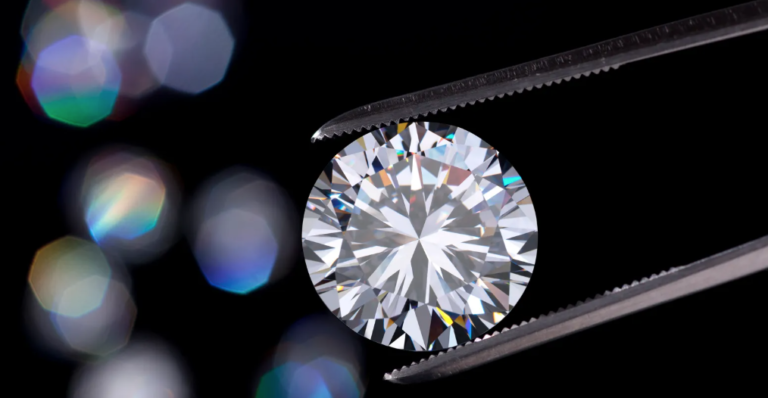
Cut refers to how well a diamond has been proportioned and faceted—not its shape.
Many buyers confuse cut with shape.
For example:
- Round
- Oval
- Cushion
- Emerald
- Princess
These are shapes.
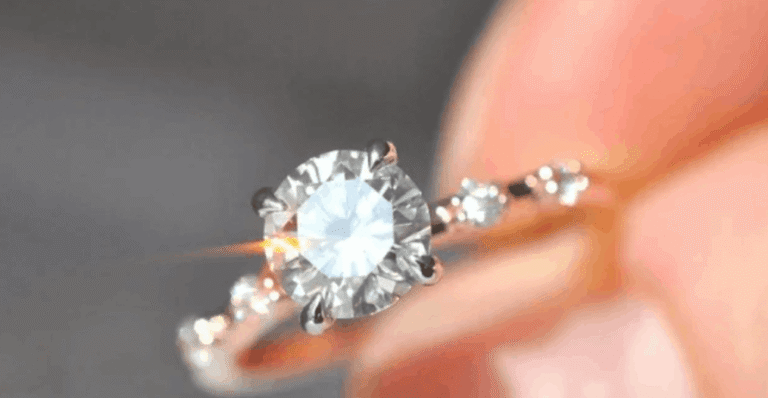
Cut quality is about how effectively the diamond reflects light.
A well-cut diamond will appear:
- brighter
- more fiery
- more brilliant
A poorly cut diamond may look dull even if it has excellent color and clarity.
Diamond Cut Grades
Diamonds are usually graded as:
- Excellent / Ideal
- Very Good
- Good
- Fair
- Poor
For maximum brilliance, prioritize:
- Excellent
- Ideal
This is especially important for round diamonds.
A smaller diamond with an excellent cut often looks more impressive than a larger poorly cut stone.
Why Cut Matters Most
Cut determines how light enters and exits the diamond.
When proportions are correct:
- light reflects internally
- brilliance increases
- sparkle becomes stronger
This is why many experts recommend:
Never compromise too much on cut.
2. Colour: How White Is the Diamond?
Diamond colour refers to the absence of yellow or brown tint.
The less colour present, the rarer and generally more valuable the diamond.
The grading scale starts from:
- D (completely colorless)
and continues to:
- Z (noticeable yellow or brown tint)
Diamond Colour Scale
D–F: Colorless
Premium range.
These diamonds are icy white and highly valued.
Best for buyers wanting top-tier quality.
G–H: Near Colorless
Excellent value range.
These diamonds appear white to most eyes but cost less than D–F.
This is often the sweet spot for buyers.
I–J: Slight Warmth
Slight tint may be visible in some lighting.
Can still look beautiful, especially in yellow or rose gold settings.
K and Below
More visible warmth or yellow tint.
Budget-friendly but less common for premium engagement rings.
Best Colour for Value
For many buyers:
- G
- H
offer the best balance of appearance and price.
You often get a visually white diamond without paying the premium for D or E.
3. Clarity: Internal and External Imperfections
Clarity measures how clean a diamond is.
Most diamonds contain natural imperfections formed during growth.
These include:
Internal flaws:
- inclusions
External flaws:
- blemishes
Clarity grading evaluates the size, location, and visibility of these characteristics.
Diamond Clarity Scale
FL – Flawless
No visible inclusions or blemishes under 10x magnification.
Extremely rare.
IF – Internally Flawless
No internal inclusions.
Very rare.
VVS1 / VVS2
Very, very slight inclusions.
Extremely difficult to detect.
VS1 / VS2
Very slight inclusions.
Usually invisible to the naked eye.
Excellent balance.
SI1 / SI2
Slight inclusions.
May or may not be visible depending on size and placement.
Good value options.
I1 / I2 / I3
Visible inclusions.
Lower clarity and often reduced brilliance.
Best Clarity for Most Buyers
For practical buying, many shoppers choose:
- VS1
- VS2
- SI1 (eye-clean)
These often look flawless without paying for microscopic perfection.
Remember:
You are buying with your eyes, not a microscope.
4. Carat: Diamond Weight
Carat refers to the weight of a diamond.
It does not directly measure visual size, although larger carat usually means a larger diamond.
1 carat = 200 milligrams
Common sizes include:
- 0.50 ct
- 1.00 ct
- 1.50 ct
- 2.00 ct
Important Carat Tip
A larger carat does not automatically mean a better diamond.
A poorly cut 2-carat diamond can look less beautiful than a well-cut 1-carat diamond.
Carat should always be balanced with:
- cut
- colour
- clarity
Magic Diamond Sizes
Certain carat thresholds are highly popular:
- 0.50 ct
- 1.00 ct
- 1.50 ct
- 2.00 ct
Prices often jump significantly at these weights.
A smart buying trick is choosing just below them.
For example:
- 0.90 ct instead of 1.00 ct
- 1.90 ct instead of 2.00 ct
This can save money with minimal visible difference.
Which 4C Matters Most?
If budget is limited, prioritize in this order:
1. Cut
Most important for sparkle.
2. Carat
Choose desired size.
3. Colour
Aim for G–H for strong value.
4. Clarity
VS2 or eye-clean SI1 is often enough.
A common smart buying formula is:
- Excellent cut
- G/H colour
- VS2/SI1 clarity
- Preferred carat size
This often delivers the best balance.
Final Thoughts
The 4Cs are the foundation of diamond buying.
Understanding them helps you compare diamonds intelligently and buy with confidence.
Quick recap:
- Cut = sparkle
- Colour = whiteness
- Clarity = cleanliness
- Carat = weight
The best diamond is not necessarily the most expensive.
It is the diamond that gives you the best combination of beauty, quality, and value within your budget.