The Largest Diamond in the World
When discussing legendary gemstones, no diamond stands taller both literally and historically than the Cullinan Diamond.
Discovered in South Africa in 1905, the Cullinan Diamond remains the largest gem-quality rough diamond ever found, weighing an astonishing 3,106 carats (approximately 621 grams).
To put that into perspective: this rough diamond was about the size of a human fist.
Its extraordinary size, clarity, and historical significance transformed it from a geological miracle into one of the most important treasures in royal jewelry history.
Today, the Cullinan lives on not as one diamond, but as nine principal stones that form part of the British Crown Jewels and private royal collections.
Discovery of the Cullinan Diamond
The Cullinan Diamond was discovered on January 26, 1905, at the Premier Mine near Pretoria, South Africa.
The mine’s superintendent, Frederick Wells, reportedly noticed a flash of light reflecting from the wall of the mine.
Upon investigation, he recovered what initially looked like a piece of glass embedded in the rock.
Instead, it turned out to be something far more extraordinary:
Cullinan Rough Diamond Facts
- Weight: 3,106 carats
- Length: 10.1 cm
- Width: 6.35 cm
- Depth: 5.9 cm
- Color: Exceptional white
- Clarity: Remarkably high
The diamond was named after Sir Thomas Cullinan, owner of the Premier Mine.
How Much Is the Cullinan Diamond Worth?
Because the Cullinan Diamond was never sold publicly, its exact value is unknown.
However, based on:
- size
- clarity
- historical significance
- rarity
Experts estimate the original rough diamond could be worth hundreds of millions of dollars, with some valuations exceeding $1 billion USD.
But realistically, the Cullinan’s value is beyond commercial pricing.
Once incorporated into royal regalia, it became historically priceless.
A Royal Gift to the British Crown
In 1907, two years after discovery, the government of the Transvaal Colony purchased the Cullinan Diamond and presented it to King Edward VII as a birthday gift.
The gesture was intended to symbolize political unity between South Africa and Britain following the Boer War.
The King then commissioned the famous diamond cutters:
Joseph Asscher & Co. (Amsterdam)
to transform the rough diamond into polished stones.
The Famous Cutting of the Cullinan Diamond
Cutting the world’s largest diamond was an incredibly risky operation.
One wrong strike could have shattered the stone.
Master cutter Joseph Asscher spent months studying the diamond’s internal structure.
He prepared a precise groove before attempting the historic split.
On February 10, 1908:
Asscher struck the blade.
The diamond split perfectly.
Legend says the tension was so intense that Asscher fainted immediately afterward.
Whether true or not, the story reflects the enormous pressure involved.
The Nine Cullinan Diamonds
The Cullinan was eventually cut into:
- 9 principal diamonds
- Nearly 100 smaller stones
These nine stones became known as:
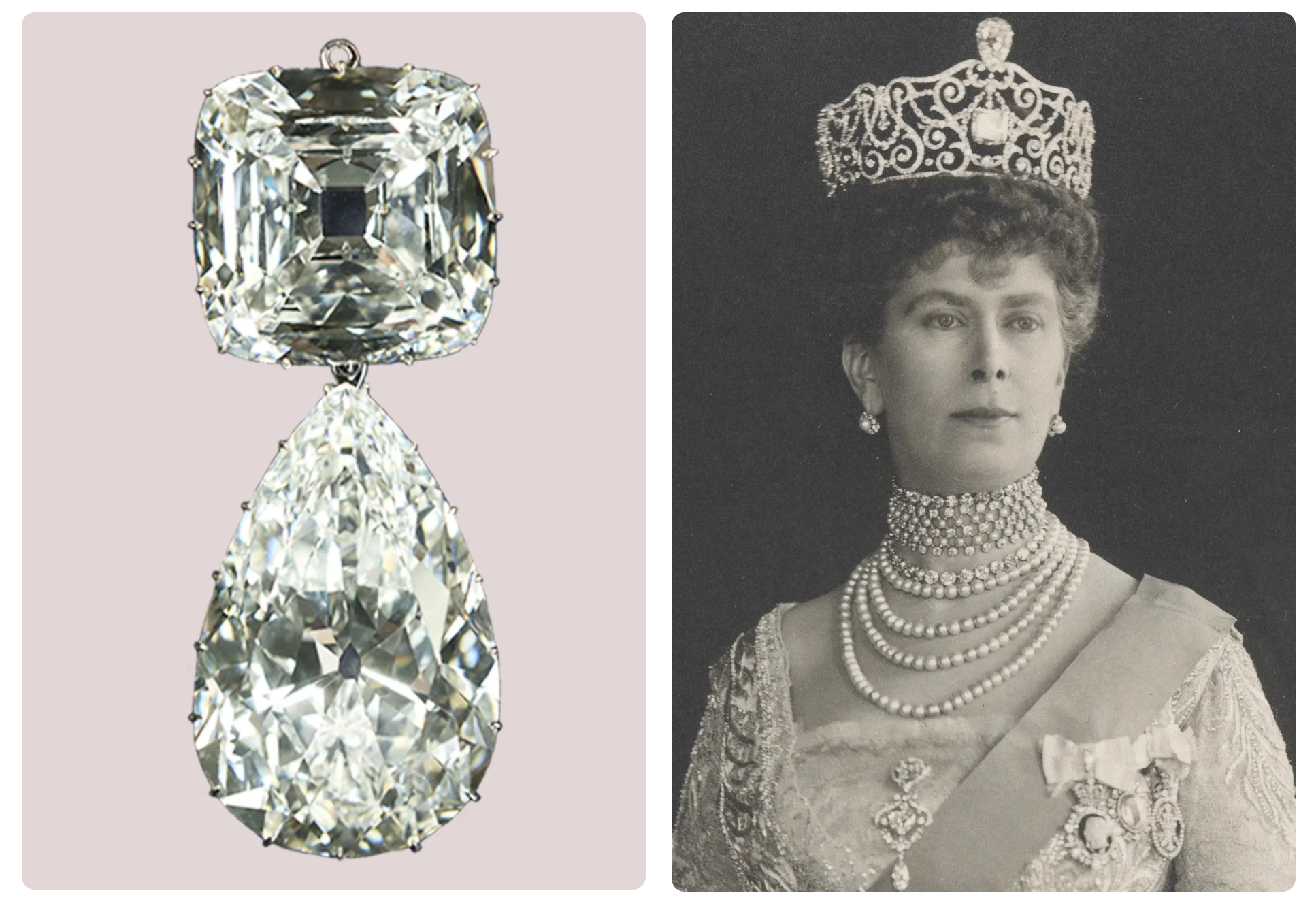
Cullinan I – The Great Star of Africa
Weight:
530.2 carats
Cut:
Pear-shaped
Cullinan I is the largest clear cut diamond in the world.
It is mounted in the:
Sovereign’s Sceptre with Cross
This is one of the most recognizable royal jewels in history.
Cullinan I can also be removed and worn as a brooch.
Cullinan II – The Second Star of Africa
Weight:
317.4 carats
Cut:
Cushion-cut
Cullinan II is mounted in the:
Imperial State Crown
It sits prominently on the front of the crown and is visible during major British state ceremonies.
Cullinan III – The Lesser Star of Africa
Weight:
94.4 carats
Cut:
Pear-shaped
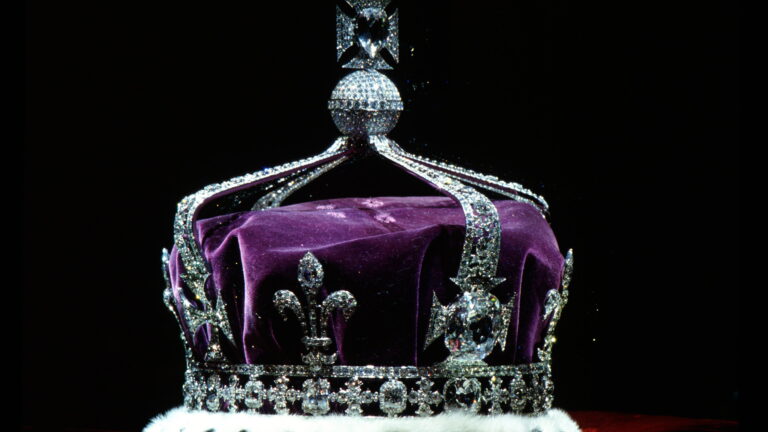
Cullinan III was originally set into Queen Mary’s Crown.
It later became part of a famous royal brooch combination nicknamed:
“Granny’s Chips”
A playful nickname used by Queen Elizabeth II for Cullinan III and IV.
Cullinan IV
Weight:
63.6 carats
Cut:
Square cushion
Originally mounted beneath the Koh-i-Noor Diamond in Queen Mary’s Crown.
Later paired with Cullinan III.
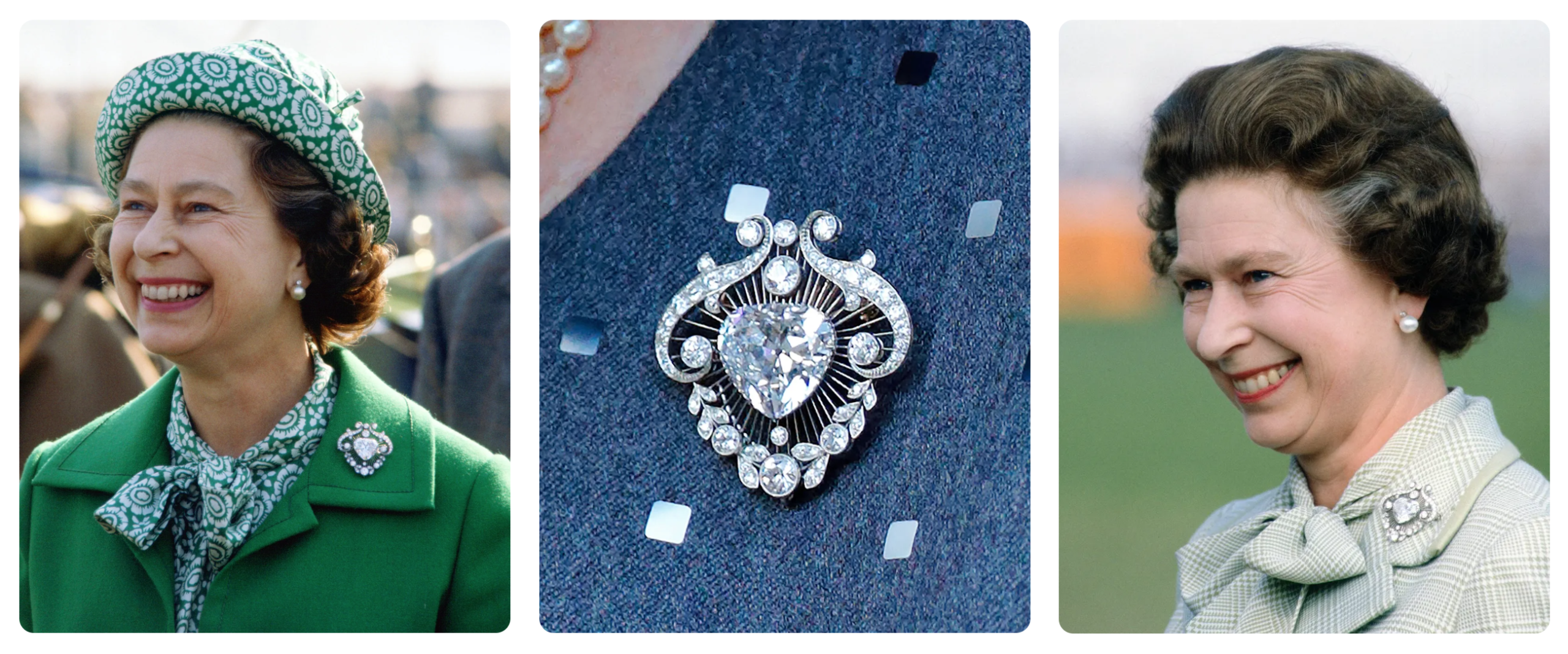
Cullinan V
Weight:
18.8 carats
Cut:
Heart-shaped
Set as the centerpiece of the:
Heart of the Delhi Durbar Brooch
This remains one of the most elegant royal brooches.
Cullinan VI
Weight:
11.5 carats
Cut:
Marquise
Often worn as a pendant or combined into royal brooch settings.
Cullinan VII
Weight:
8.8 carats
Cut:
Marquise
Mounted in the historic:
Delhi Durbar Necklace
A masterpiece of royal jewelry craftsmanship.
Cullinan VIII
Weight:
6.8 carats
Cut:
Cushion
Mounted in a coordinating royal brooch alongside Cullinan VI.
Cullinan IX
Weight:
4.39 carats
Cut:
Pear-shaped
Set into a platinum ring for Queen Mary.
Despite being the smallest, it remains historically significant.
Where Are the Cullinan Diamonds Today?
Today:
British Crown Jewels
- Cullinan I
- Cullinan II
Royal Family Private Collection
- Cullinan III to IX
Most are associated with:
- Queen Mary
- Queen Elizabeth II
- Queen Camilla
- King Charles III coronation regalia
They remain among the most valuable and historically significant diamonds in existence.
Why the Cullinan Diamond Is So Important
The Cullinan is more than a large diamond.
It represents:
Geological Wonder
A natural miracle formed over billions of years.
Royal Heritage
Integrated into crowns, sceptres, brooches, and necklaces.
Exceptional Craftsmanship
One of history’s most technically impressive cutting achievements.
Historical Symbolism
Closely tied to British imperial history and monarchy.
Interesting Cullinan Diamond Facts
- Largest rough gem diamond ever discovered
- Found in South Africa in 1905
- Originally weighed 3,106 carats
- Cut into 9 major stones
- Cullinan I remains largest colorless cut diamond in the world
- Part of British Crown Jewels
Controversy Around Ownership
Like many famous diamonds, the Cullinan is not without controversy.
Because it was gifted during colonial-era British rule in South Africa, discussions occasionally arise regarding:
- ownership
- colonial history
- cultural significance
However, unlike the Koh-i-Noor, the Cullinan was formally presented as a gift rather than seized through treaty or conquest.
Still, its history remains intertwined with empire and monarchy.
Final Thoughts
The Cullinan Diamond is one of nature’s greatest masterpieces.
From a rough stone hidden deep underground for billions of years to becoming the centerpiece of royal crowns and sceptres, its journey is extraordinary.
No other diamond combines:
- scale
- beauty
- craftsmanship
- history
- royal prestige
quite like the Cullinan.
It is not simply the largest diamond ever found.
It is one of the greatest stories ever told in jewelry history.